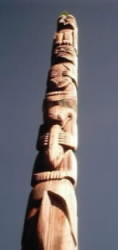
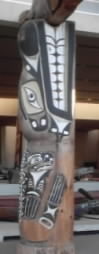
Different types of totem poles serve different purposes. The pole on the far left is a memorial pole used to honor or commemorate something or someone - perhaps a chief who had just died. The one one the right was a welcoming pole. These poles are placed where they would be easily seen and are among the tallest of poles.
Mortuary poles (not shown) were made with a hollowed out top where a cask would be placed containing the body of the deceased.
The poles here can be identified as house posts by the U shape cut out at the top. They were used to support the main beams in a house.
The left most pole would be the centre piece of the house and bear the crests of the family. The pole on the far right was one of a pair of frontal house poles which would have been used at the entrance, they would be decorated with carvings to symbolize the family also.
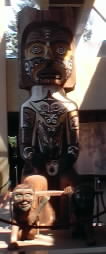
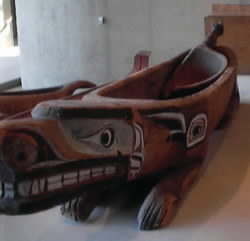
For a chief to retain status it was necessary to throw a certain number of 'potlatch' throughout the year. These were not just great feasts, but brought the whole village together for the purpose of establishing laws, conducting marriages and other such governing duties. What you see in this picture is just one of many food bowls which would be carried into the potlatch with great enthusiasm. These were BIG - I could easily have laid down in this bowl and been very comfortable!
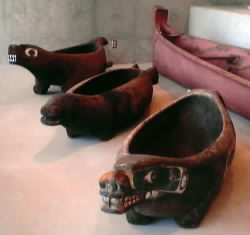
More potlatch bowls! The one in the middle is definitely a carving of a seal, but I cannot remember what the other two were. It was handy having the tour guide around to ask what the carvings were, as they are not always obvious. As we went round the exhibits you quickly learn how to spot some of the more common animals which are used.
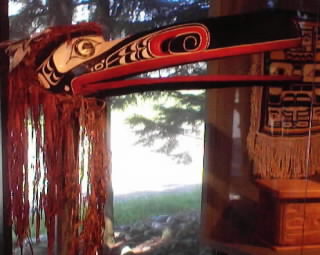
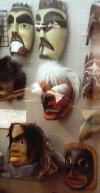
Masks were very important to the First Nations people. It was believed that when you wear a mask you inherit the powers of that which the mask represented. They are used at potlatch dances and other ceremonies
Many masks were made, representing everything from mythical monsters to 'white' people!